

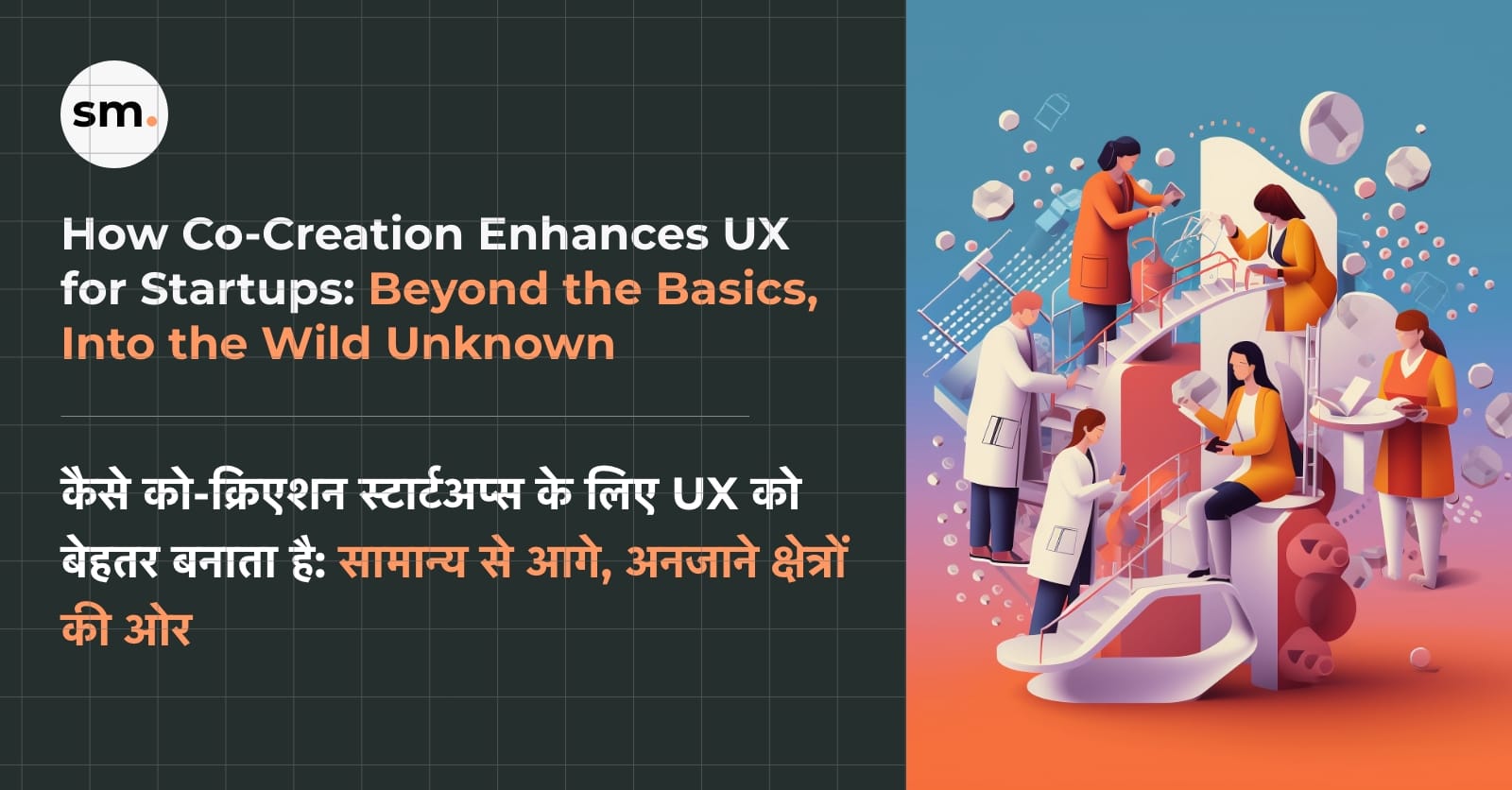
When you hear “co-creation,” it probably conjures up images of your target users throwing in their two cents, tweaking your product, and you, as a startup, ending up with a slightly improved version of what you were already building. That’s nice. It’s cute. But let’s be honest—co-creation is far more than that. It’s not just a tool to make things a bit better; it’s a philosophy that has the power to fundamentally reshape how startups build and scale products in ways you’ve never thought about.
In a resource-constrained environment, startups need to go beyond common definitions of co-creation and UX design to uncover untapped areas that could lead to groundbreaking product-market fits. Here’s where it gets wild—let’s explore how co-creation can actually turn resource constraints into your biggest advantage.
जानिए कैसे स्टार्टअप्स को-क्रिएशन (Co-creation – सह-निर्माण) का उपयोग करके यूज़र एक्सपीरियंस (UX – उपयोगकर्ता अनुभव) को बुनियादी से आगे ले जाकर नवाचार (Innovation) की राह पर ले जा सकते हैं। ऐसे तरीकों की खोज करें, जिनसे स्टार्टअप्स उपयोगकर्ताओं के साथ मिलकर प्रोडक्ट बनाकर स्केलेबिलिटी (Scalability – विस्तार) को बढ़ा सकते हैं और यहां तक कि सीमित संसाधनों वाले वातावरण में बाज़ार में सफलता हासिल कर सकते हैं।
जब आप “को-क्रिएशन” सुनते हैं, तो शायद आप सोचते हैं कि इसमें आपके लक्ष्य उपयोगकर्ता अपनी राय देकर आपके प्रोडक्ट में कुछ बदलाव कर देंगे, और अंततः आपको अपने प्रोडक्ट का थोड़ा बेहतर संस्करण मिल जाएगा। यह ठीक है। सुनने में अच्छा लगता है। लेकिन सच कहें तो—को-क्रिएशन इससे कहीं अधिक है। यह सिर्फ एक टूल (Tool) नहीं है जो चीज़ों को थोड़ा बेहतर बनाता है; यह एक ऐसी फिलॉसफी (Philosophy – दर्शन) है जो स्टार्टअप्स को जिस तरह से प्रोडक्ट बनाते हैं और स्केल (Scale) करते हैं, उसे मौलिक रूप से बदलने की शक्ति रखती है।
सीमित संसाधनों वाले वातावरण में, स्टार्टअप्स को को-क्रिएशन और UX डिज़ाइन की सामान्य परिभाषाओं से आगे बढ़कर उन क्षेत्रों की खोज करनी चाहिए, जो उत्पाद और बाज़ार के बीच नया तालमेल (Product-Market Fit) ला सकते हैं। यहीं से चीजें दिलचस्प होती हैं—आइए देखें कि को-क्रिएशन कैसे आपके संसाधन की कमी को आपकी सबसे बड़ी ताकत बना सकता है।
Why Startups are Still Doing Co-Creation Wrong (क्यों स्टार्टअप्स को-क्रिएशन को अब भी गलत तरीके से कर रहे हैं?)
The startup world is full of myths about UX. Most think co-creation is about tweaking products based on user feedback, but they’re missing the point. As Steve Blank outlines in “The Four Steps to the Epiphany”, startups should aim for validated learning, where users actively shape the product from the get-go. Instead of seeking validation after the fact, startups should be co-creating with users to ensure they’re building something valuable right from the start.
Here’s the kicker—co-creation isn’t about feedback, it’s about partnership. And startups can leverage this partnership to not only improve UX but also to scale faster, spend less, and innovate more effectively.
स्टार्टअप्स की दुनिया UX को लेकर कई भ्रांतियों से भरी हुई है। अधिकांश लोग सोचते हैं कि को-क्रिएशन उपयोगकर्ता की प्रतिक्रिया (Feedback) के आधार पर प्रोडक्ट में सुधार करने के बारे में है, लेकिन वे असल बात चूक रहे हैं। जैसा कि स्टीव ब्लैंक (Steve Blank) अपनी पुस्तक “The Four Steps to the Epiphany” में बताते हैं, स्टार्टअप्स को वैलिडेटेड लर्निंग (Validated Learning – प्रमाणित सीख) की ओर बढ़ना चाहिए, जहां उपयोगकर्ता शुरू से ही प्रोडक्ट को आकार देने में सक्रिय भूमिका निभाते हैं।
यहां असली फर्क यह है—को-क्रिएशन सिर्फ फीडबैक के बारे में नहीं है, यह साझेदारी (Partnership) के बारे में है। और स्टार्टअप्स इस साझेदारी का लाभ केवल UX में सुधार के लिए नहीं, बल्कि तेज़ी से स्केल करने, कम खर्च करने, और अधिक प्रभावी तरीके से नवाचार (innovation) करने के लिए उठा सकते हैं।
Co-Creation: Turning Constraints into Superpowers (को-क्रिएशन: सीमाओं को ताकत में बदलना)
Think of LEGO’s Ideas platform, where customers submit and vote on new product ideas. This isn’t just a feedback loop—it’s a collaborative process that harnesses user research best practices to create breakthrough products. Startups can adopt similar approaches to turn users into a powerful R&D team, driving innovation without additional overhead.
कल्पना करें LEGO के आइडियाज प्लेटफॉर्म (Ideas Platform) की, जहां ग्राहक नए प्रोडक्ट आइडियाज (Product Ideas) प्रस्तुत करते हैं और उन पर वोट करते हैं। यह सिर्फ एक फीडबैक लूप (Feedback Loop) नहीं है—यह एक सहयोगी प्रक्रिया है जो उपयोगकर्ता अनुसंधान (User Research – उपयोगकर्ता शोध) के बेहतरीन तरीकों को अपनाकर क्रांतिकारी उत्पाद बनाती है। स्टार्टअप्स इस तरह की प्रक्रिया को अपनाकर उपयोगकर्ताओं को एक शक्तिशाली R&D (रिसर्च एंड डेवलपमेंट) टीम के रूप में शामिल कर सकते हैं, जो बिना अतिरिक्त लागत के नवाचार को बढ़ावा देती है।
Users as Your Hidden R&D Team (उपयोगकर्ताओं को एक छिपी हुई R&D टीम की तरह इस्तेमाल करना)
Here’s where most startups miss the point: you don’t just involve your users to refine an existing idea. You get them involved to generate the ideas. Think about it: instead of hiring a bunch of experts or paying for fancy market research, co-creation allows you to leverage your users as your R&D team—for free.
A famous example is LEGO’s Ideas platform, where fans and customers submit and vote on new product ideas. By crowd-sourcing creativity from their user base, LEGO not only gets innovative products but also builds deep loyalty. Startups can mimic this approach, turning co-creation into a powerful, ongoing collaboration that serves as their innovation engine without adding overhead.
Imagine if your users are the ones who tell you what your MVP should look like before you even sketch it out. The result? You’re building a product they already want, with no wasted features or guesswork.
यहां सबसे बड़ी गलती यह है कि स्टार्टअप्स अपने उपयोगकर्ताओं को सिर्फ मौजूदा आइडिया को बेहतर बनाने के लिए शामिल करते हैं। लेकिन आपको उन्हें आइडिया उत्पन्न करने के लिए शामिल करना चाहिए। सोचिए: विशेषज्ञों की टीम को हायर (Hire) करने या महंगे बाज़ार शोध पर खर्च करने के बजाय, को-क्रिएशन आपको आपके उपयोगकर्ताओं को एक R&D टीम के रूप में मुफ्त में उपयोग करने की अनुमति देता है।
LEGO का प्रसिद्ध उदाहरण लें, जहां प्रशंसक और ग्राहक नए प्रोडक्ट आइडियाज प्रस्तुत करते हैं और उन पर वोट करते हैं। अपनी उपयोगकर्ता बेस से रचनात्मकता (Creativity) को क्राउड-सोर्स (Crowd-source) करके, LEGO न केवल नवाचारी उत्पाद प्राप्त करता है, बल्कि गहरी वफादारी भी बनाता है। स्टार्टअप्स इस दृष्टिकोण का अनुसरण कर सकते हैं और को-क्रिएशन को एक शक्तिशाली, चल रही साझेदारी में बदल सकते हैं, जो उनके नवाचार इंजन के रूप में काम करती है, बिना अतिरिक्त खर्च के।
कल्पना करें कि आपके उपयोगकर्ता ही यह बताते हैं कि आपका MVP कैसा दिखना चाहिए, इससे पहले कि आप इसे डिज़ाइन करें। परिणाम? आप एक ऐसा प्रोडक्ट बना रहे हैं जो वे पहले से चाहते हैं, जिसमें कोई अनावश्यक फीचर्स या अटकलें नहीं होतीं।
Scalability Without Scalability (स्केलेबिलिटी बिना अधिक खर्च के)
For startups, the dream is always scalability, but when you have minimal resources, scaling can seem like a distant fantasy. Co-creation gives you a shortcut. By involving your users early in the process, you’re not just building a product, you’re building a community that can help scale that product organically.
Here’s where things get really interesting: co-creation transforms users into champions. They feel a sense of ownership and investment in the product, leading to word-of-mouth marketing that’s far more powerful than anything you could pay for. Early-stage customers who have a hand in shaping your product are five times more likely to promote it, according to a report by Deloitte. It’s not just about getting product input; it’s about turning your early adopters into your first sales team.
स्टार्टअप्स के लिए हमेशा का सपना स्केलेबिलिटी होता है, लेकिन जब आपके पास न्यूनतम संसाधन होते हैं, तो स्केल करना एक दूर का सपना लग सकता है। को-क्रिएशन आपको एक शॉर्टकट (Shortcut) देता है। उपयोगकर्ताओं को प्रक्रिया में जल्दी शामिल करके, आप सिर्फ एक प्रोडक्ट नहीं बना रहे हैं, आप एक समुदाय बना रहे हैं, जो ऑर्गेनिक रूप से उस प्रोडक्ट को स्केल करने में मदद कर सकता है।
यहां चीजें और दिलचस्प हो जाती हैं: को-क्रिएशन उपयोगकर्ताओं को आपके प्रोडक्ट के चैंपियंस (Champions) में बदल देता है। वे उत्पाद में एक स्वामित्व (Ownership) और निवेश की भावना महसूस करते हैं, जिससे वर्ड-ऑफ-माउथ (Word-of-mouth) मार्केटिंग शुरू होती है, जो किसी भी सशुल्क मार्केटिंग से कहीं अधिक शक्तिशाली होती है। डेलॉइट (Deloitte) की एक रिपोर्ट के अनुसार, जो शुरुआती ग्राहक आपके प्रोडक्ट को आकार देने में मदद करते हैं, वे इसे प्रमोट (Promote) करने की पाँच गुना अधिक संभावना रखते हैं। यह केवल प्रोडक्ट इनपुट लेने के बारे में नहीं है; यह आपके शुरुआती उपयोगकर्ताओं को आपके पहले सेल्स (Sales) टीम में बदलने के बारे में है।
Real-Time UX Iteration in a Non-Traditional Way (रियल-टाइम UX सुधार, गैर-पारंपरिक तरीकों से)
Forget about gathering feedback months after launch or endlessly tweaking a prototype in isolation. Imagine you’re co-creating the product live—think of it like an interactive concert where the audience can change the song in real time. Sound chaotic? Maybe, but this is how epic UX breakthroughs happen.
Take Figma for example. Figma didn’t just design for their users—they built the product with designers, creating a platform that evolved in real-time through beta testing and constant iteration. Designers could test new tools as they were being developed, meaning Figma had real-time validation at every stage. This radically sped up their product development and ensured that what they launched was exactly what users needed.
For startups, this real-time co-creation doesn’t require massive teams—it just requires the right tools and the willingness to listen closely as you build. This lets you iterate in ways that resource-heavy startups simply can’t.
महीनों बाद फीडबैक इकट्ठा करने या प्रोटोटाइप (Prototype) को अलगाव में बार-बार संशोधित करने के बारे में भूल जाइए। कल्पना करें कि आप प्रोडक्ट को लाइव (Live) को-क्रिएट कर रहे हैं—इसे एक इंटरएक्टिव (Interactive) कॉन्सर्ट (Concert) की तरह समझें, जहां दर्शक वास्तविक समय में गीत बदल सकते हैं। यह सुनने में अराजक लगता है? शायद, लेकिन यही वह तरीका है जिससे UX में असाधारण सफलताएं मिलती हैं।
फ़िग्मा (Figma) का उदाहरण लें। फ़िग्मा ने सिर्फ उपयोगकर्ताओं के लिए डिज़ाइन नहीं किया, बल्कि डिज़ाइनरों के साथ मिलकर प्रोडक्ट बनाया। उन्होंने ऐसा प्लेटफ़ॉर्म तैयार किया, जो रियल-टाइम (Real-time) में बीटा टेस्टिंग (Beta Testing) और लगातार सुधार के माध्यम से विकसित हुआ। डिज़ाइनर नए टूल्स को उसी समय टेस्ट कर सकते थे, जब वे बनाए जा रहे थे, जिससे फ़िग्मा को हर चरण में वास्तविक समय में सत्यापन प्राप्त हुआ। इसने उनके प्रोडक्ट विकास को तेज कर दिया और यह सुनिश्चित किया कि जो उन्होंने लॉन्च किया, वह ठीक वही था जिसकी उपयोगकर्ताओं को आवश्यकता थी।
स्टार्टअप्स के लिए, इस रियल-टाइम को-क्रिएशन को लागू करने के लिए बड़े-बड़े संसाधनों की ज़रूरत नहीं होती—बस सही टूल्स और उपयोगकर्ताओं की सुनने की इच्छा चाहिए। यह आपको ऐसे तरीकों से सुधार करने देता है जो बड़े संसाधनों वाले स्टार्टअप्स नहीं कर सकते।
Access to Non-Obvious Insights (गैर-आम अंतर्दृष्टियों तक पहुंच)
Here’s where it gets wild. When you bring users into the process, you stop guessing and start discovering non-obvious use cases. Your product might solve a problem you didn’t even know existed. Co-creation opens the door to ideas and applications you weren’t aiming for—applications that could unlock entirely new markets or verticals.
For example, Airtable didn’t just launch as a simple spreadsheet app—it co-created its entire platform with different user groups. Through this, they discovered that users were building CRMs, project management tools, and even content calendars. This unintentional discovery of new use cases gave Airtable the ability to appeal to multiple markets, enabling them to grow exponentially.
यहां चीजें और रोमांचक हो जाती हैं। जब आप उपयोगकर्ताओं को प्रक्रिया में शामिल करते हैं, तो आप अंदाजा लगाने के बजाय खोजने लगते हैं। आपका प्रोडक्ट उन समस्याओं को हल कर सकता है, जिनके बारे में आपको पता भी नहीं था। को-क्रिएशन उन विचारों और अनुप्रयोगों के द्वार खोलता है, जिनके बारे में आपने पहले सोचा भी नहीं था—ऐसे अनुप्रयोग जो पूरी तरह से नए बाज़ारों या वर्टिकल्स (Verticals) को खोल सकते हैं।
उदाहरण के लिए, Airtable ने सिर्फ एक साधारण स्प्रेडशीट ऐप (Spreadsheet App) के रूप में लॉन्च नहीं किया; उन्होंने अपने पूरे प्लेटफ़ॉर्म को विभिन्न उपयोगकर्ता समूहों के साथ मिलकर को-क्रिएट किया। इसके माध्यम से, उन्होंने पाया कि उपयोगकर्ता सीआरएम (CRM), प्रोजेक्ट मैनेजमेंट (Project Management) टूल्स और कंटेंट कैलेंडर्स (Content Calendars) जैसी चीज़ों का निर्माण कर रहे थे। इस नए उपयोग के मामलों की अनजाने में खोज ने Airtable को कई बाजारों में अपील करने और तेज़ी से विस्तार करने की क्षमता दी।
Co-Creation as a Lean Methodology Hack (को-क्रिएशन को लीन मेथडोलॉजी (Lean Methodology) हैक के रूप में अपनाएं)
Startups love to throw around terms like “Lean Methodology,” but they often forget that the whole premise is build, test, iterate, repeat. Co-creation amplifies this by skipping the “guess” phase entirely. You’re no longer wondering what to build and testing after the fact—you’re building the test with your users in real time.
In resource-constrained environments, this is a game-changer. Why? Because you’re not wasting resources building something that’s only going to get torn down later. Instead, you’re building alongside the people who will actually use it. This reduces risk, accelerates development, and increases the likelihood that your MVP will stick the landing.
स्टार्टअप्स को “लीन मेथडोलॉजी” जैसे शब्दों का उपयोग करना अच्छा लगता है, लेकिन वे अक्सर भूल जाते हैं कि इसकी पूरी अवधारणा “बनाओ, टेस्ट करो, सुधारो, दोहराओ” है। को-क्रिएशन इसे और तेज कर देता है क्योंकि यह “अंदाजा लगाने” वाले चरण को पूरी तरह से छोड़ देता है। आप अब यह सोच नहीं रहे होते कि क्या बनाना है और बाद में टेस्ट करना है—आप अपने उपयोगकर्ताओं के साथ रियल-टाइम में ही टेस्ट बना रहे होते हैं।
सीमित संसाधनों वाले वातावरण में, यह एक गेम-चेंजर है। क्यों? क्योंकि आप अपने संसाधनों को ऐसे प्रोडक्ट पर बर्बाद नहीं कर रहे जो बाद में निरस्त हो जाएगा। इसके बजाय, आप उन लोगों के साथ मिलकर बना रहे होते हैं जो वास्तव में इसे उपयोग करने वाले हैं। यह जोखिम को कम करता है, विकास को तेज करता है और आपके MVP के सफल होने की संभावना को बढ़ाता है।
The Unexplored Potential of Co-Creation for Startups (स्टार्टअप्स के लिए को-क्रिएशन की अज्ञात संभावनाएं)
Most startups treat co-creation as an afterthought—a checkbox on the UX checklist. But this is where the future of innovation lies, especially for those working with tight resources. Startups need to see co-creation not as a way to improve UX, but as a comprehensive strategy for building better products, fostering community, and scaling faster with fewer resources.
Co-creation allows you to turn the very constraints of a startup into your superpowers. With a lack of resources, you’re forced to innovate more effectively, cut through the noise, and create something users are deeply invested in. So stop thinking about UX as just “making things easier for users.” Start thinking about it as building the future alongside your users.
In a world that demands agility and results, co-creation isn’t just helpful—it’s necessary. And startups who embrace it will find they don’t need big budgets or giant teams to make a significant impact—they just need to invite their users into the process and watch as the magic unfolds.
अधिकांश स्टार्टअप्स को-क्रिएशन को एक यूएक्स चेकलिस्ट (UX Checklist) में एक बॉक्स के रूप में मानते हैं। लेकिन यहां नवाचार का भविष्य छिपा हुआ है, खासकर उन लोगों के लिए जो तंग संसाधनों के साथ काम कर रहे हैं। स्टार्टअप्स को को-क्रिएशन को केवल UX में सुधार करने के तरीके के रूप में नहीं, बल्कि बेहतर प्रोडक्ट बनाने, समुदाय को बढ़ावा देने और कम संसाधनों के साथ तेजी से स्केल करने की व्यापक रणनीति के रूप में देखना चाहिए।
को-क्रिएशन आपको स्टार्टअप की सीमाओं को आपकी सुपरपावर (Superpower) में बदलने की अनुमति देता है। संसाधनों की कमी के साथ, आप अधिक प्रभावी ढंग से नवाचार करने के लिए मजबूर होते हैं, शोर को काटते हैं और कुछ ऐसा बनाते हैं जिसमें उपयोगकर्ता गहराई से निवेशित होते हैं। इसलिए UX को केवल उपयोगकर्ताओं के लिए चीजों को आसान बनाने के रूप में मत सोचिए। इसे उपयोगकर्ताओं के साथ मिलकर भविष्य बनाने के रूप में देखिए।
इस दुनिया में जहां चपलता (Agility) और परिणामों की मांग है, को-क्रिएशन सिर्फ सहायक नहीं है—यह आवश्यक है। और जो स्टार्टअप्स इसे अपनाते हैं, वे पाएंगे कि उन्हें बड़े बजट या विशाल टीमों की ज़रूरत नहीं है—उन्हें बस अपने उपयोगकर्ताओं को प्रक्रिया में शामिल करने की ज़रूरत है और देखिए कैसे जादू घटित होता है।